Unmasking Obstructive Sleep Apnoea: Your Guide to Restful Nights and Healthier Days
Introduction: The Silent Struggle for Breath
Imagine drifting off to sleep, expecting a night of restorative rest, only to have your breathing repeatedly interrupted, sometimes hundreds of times. This isn't a nightmare; it's the reality for millions living with Obstructive Sleep Apnoea (OSA). Often dismissed as just loud snoring, OSA is a serious medical condition where the airway repeatedly collapses during sleep, blocking the flow of air. This silent struggle for breath not only fragments sleep but also carries significant health risks, impacting everything from your daily energy levels to your cardiovascular health. At Dr. Femi Olulode's Sleep School, we believe that understanding OSA is the first step towards reclaiming your sleep and your health. This comprehensive guide will demystify OSA, exploring what it is, how it affects your breathing, its tell-tale symptoms, who is most at risk, how it's diagnosed, and the effective treatments available, including the transformative power of CPAP therapy.
What is Obstructive Sleep Apnoea and How Does It Affect Breathing?
Obstructive Sleep Apnoea occurs when the muscles in the back of your throat relax too much during sleep, causing the soft tissue to collapse and block your airway [1]. This blockage can be partial (hypopnea) or complete (apnea). When an apnea occurs, you stop breathing entirely for a period, often 10 seconds or more. Your brain, sensing the lack of oxygen, briefly rouses you from sleep to signal your body to resume breathing. This often results in a gasp, snort, or choking sound, though you may not remember waking up [2]. These episodes can happen many times an hour, severely disrupting the natural sleep cycle and preventing you from reaching the deeper, more restorative stages of sleep. The repeated drops in blood oxygen levels and fragmented sleep put a tremendous strain on your body, leading to a cascade of health problems.
Recognizing the Signs: Symptoms of OSA
The symptoms of OSA can be subtle and often go unnoticed by the individual, frequently being reported by a bed partner. Recognizing these signs is crucial for early diagnosis and intervention.
During Sleep:
Loud, persistent snoring is often the most prominent symptom, characterized by pauses in snoring followed by gasps or choking sounds [3]. A bed partner may notice observed episodes of stopped breathing, where you stop breathing entirely. Gasping or choking sounds during sleep indicate your body is struggling to resume breathing. Restless sleep, characterized by frequent tossing and turning or abrupt awakenings, is another common sign.
While Awake:
Excessive daytime sleepiness, where you feel tired even after a full night\'s sleep, often leads to drowsiness at work, while driving, or during other activities [4].
Waking up with a headache can be a sign of poor oxygenation during sleep. Chronic sleep deprivation, a hallmark of OSA, can lead to difficulty concentrating or memory problems, impairing cognitive function. Lack of quality sleep can significantly impact emotional regulation, leading to irritability or mood changes. Dry mouth or a sore throat upon waking can occur due to mouth breathing during sleep. Frequent nighttime urination, also known as nocturia, can be a symptom as OSA can affect hormone regulation, leading to increased urine production at night.
Who\'s at Risk? Understanding OSA Risk Factors
While OSA can affect anyone, certain factors significantly increase your risk:
Obesity, particularly excess weight around the neck, is one of the strongest risk factors for OSA as it can narrow the airway [5]. A thick neck, indicating increased neck circumference, may suggest extra soft tissue that can block the airway. Some individuals naturally have a narrower throat or enlarged tonsils/adenoids, contributing to a narrowed airway. Men are two to three times more likely to have OSA than women, though the risk for women increases after menopause [6]. The risk of OSA generally increases with age. A family history of OSA suggests a genetic predisposition may exist. Alcohol and sedatives relax throat muscles, which can worsen airway obstruction. Smoking can increase inflammation and fluid retention in the upper airway, exacerbating OSA. Chronic nasal congestion, whether from allergies or anatomical issues, can contribute to OSA. Certain medical conditions, such as high blood pressure, diabetes, heart disease, stroke, and polycystic ovary syndrome (PCOS), are often associated with or exacerbated by OSA [7].
The Path to Diagnosis: What to Expect
If you suspect you have OSA, seeking a professional diagnosis is paramount. The diagnostic process typically involves:
The diagnostic process begins with a medical history and physical examination, where your doctor will inquire about your symptoms, medical history, and conduct a physical exam, often focusing on your mouth, nose, and throat. The gold standard for diagnosing OSA is a sleep study, also known as Polysomnography. This involves monitoring various bodily functions during sleep, either in a sleep lab or with a home sleep test [8]. Parameters measured include brain activity, eye movements, heart rate, blood pressure, blood oxygen levels, airflow, and breathing effort. The results help determine the severity of your OSA.
Reclaiming Your Sleep: Effective Treatments for OSA
The good news is that OSA is a treatable condition. The right treatment can dramatically improve your sleep quality, reduce daytime symptoms, and lower your risk of associated health complications. Treatment options vary depending on the severity of your OSA and individual factors.
Lifestyle Changes:
For mild OSA, or as an adjunct to other treatments, lifestyle modifications can be very effective:
Even a modest reduction in weight can significantly improve OSA symptoms. Positional therapy, such as sleeping on your side, can prevent the tongue and soft palate from collapsing into the airway. Avoiding alcohol and sedatives, especially before bedtime, is recommended. Quitting smoking improves overall respiratory health and can alleviate OSA symptoms. Treating nasal congestion by addressing allergies or other causes of nasal blockage can also be beneficial.
Continuous Positive Airway Pressure (CPAP) Therapy:
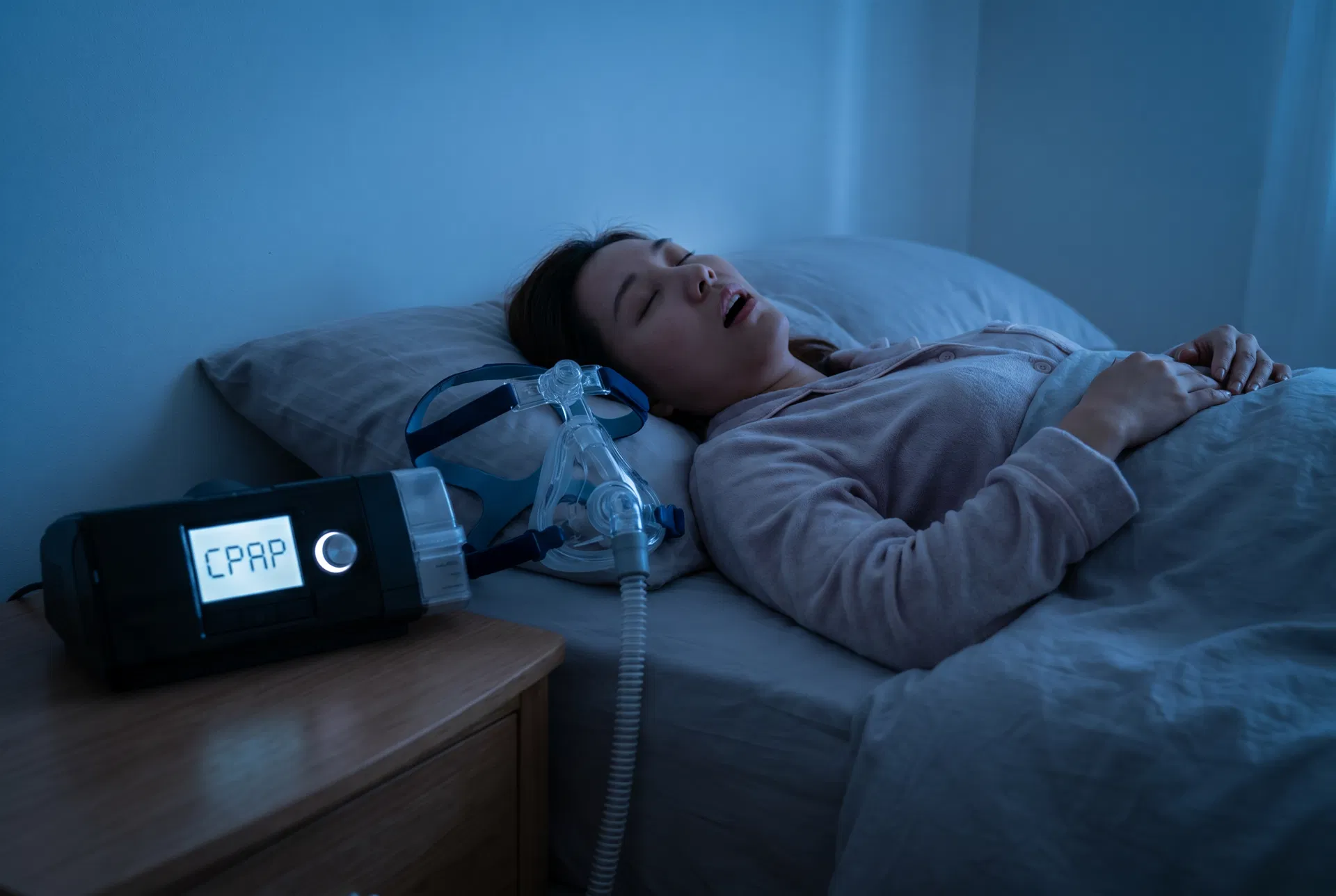
CPAP is the most common and highly effective treatment for moderate to severe OSA [9]. A CPAP machine delivers a continuous stream of air through a mask worn over your nose or nose and mouth while you sleep. This gentle air pressure keeps your airway open, preventing apneas and hypopneas. While it may take some getting used to, consistent CPAP use can lead to remarkable improvements in sleep quality, daytime alertness, and overall health. Modern CPAP machines are quieter, smaller, and more comfortable than ever before, offering various mask styles to suit individual preferences.
Other Treatment Options:
Custom-fitted oral appliances can help keep your airway open by repositioning your jaw and tongue. In some cases, surgical procedures may be recommended to remove enlarged tonsils or adenoids, or to modify the structure of the jaw or soft palate. This is typically considered when other treatments are not effective or suitable. Emerging treatments include nerve stimulation devices and new medications, though these are still less common than CPAP.
Key Takeaways
Obstructive Sleep Apnoea (OSA) is a serious sleep disorder where breathing repeatedly stops during sleep due to airway collapse. Symptoms include loud snoring, observed breathing pauses, daytime sleepiness, morning headaches, and difficulty concentrating. Risk factors include obesity, increased neck circumference, age, gender, and certain medical conditions. Diagnosis is typically made through a sleep study (polysomnography). Effective treatments range from lifestyle changes to CPAP therapy, oral appliances, and in some cases, surgery.
Reclaim Your Rest: Take the First Step Today
If you or a loved one suspect Obstructive Sleep Apnoea, don\'t let another night of restless sleep pass you by. The impact of OSA on your health and quality of life is too significant to ignore. At Dr. Femi Olulode\'s Sleep School, we are dedicated to providing expert guidance and personalized treatment plans to help you achieve the restorative sleep you deserve. Take the first step towards healthier days and more peaceful nights. Book a consultation today at sleepschool.sbs and let us help you unmask OSA and reclaim your rest.
References
[1] Cleveland Clinic. (n.d.). Obstructive Sleep Apnea (OSA): Symptoms & Treatment. Retrieved from https://my.clevelandclinic.org/health/diseases/24443-obstructive-sleep-apnea-osa [2] Johns Hopkins Medicine. (n.d.). Obstructive Sleep Apnea. Retrieved from https://www.hopkinsmedicine.org/health/conditions-and-diseases/obstructive-sleep-apnea [3] Mayo Clinic. (2025, December 4). Obstructive sleep apnea - Symptoms and causes. Retrieved from https://www.mayoclinic.org/diseases-conditions/obstructive-sleep-apnea/symptoms-causes/syc-20352090 [4] American Thoracic Society. (n.d.). What Is Obstructive Sleep Apnea in Adults?. Retrieved from https://www.thoracic.org/patients/patient-resources/resources/obstructive-sleep-apnea-in-adults.pdf [5] National Heart, Lung, and Blood Institute. (2025, January 9). Sleep Apnea - Causes and Risk Factors. Retrieved from https://www.nhlbi.nih.gov/health/sleep-apnea/causes [6] Mayo Clinic. (2025, December 9). Sleep apnea - Symptoms and causes. Retrieved from https://www.mayoclinic.org/diseases-conditions/sleep-apnea/symptoms-causes/syc-20377631 [7] National Heart, Lung, and Blood Institute. (2025, January 9). Sleep Apnea - Causes and Risk Factors. Retrieved from https://www.nhlbi.nih.gov/health/sleep-apnea/causes [8] Mayo Clinic. (2025, December 4). Obstructive sleep apnea - Diagnosis and treatment. Retrieved from https://www.mayoclinic.org/diseases-conditions/obstructive-sleep-apnea/diagnosis-treatment/drc-20352095 [9] Cleveland Clinic. (n.d.). Obstructive Sleep Apnea (OSA): Symptoms & Treatment. Retrieved from https://my.clevelandclinic.org/health/diseases/24443-obstructive-sleep-apnea-osa